
Know what can reach you before it becomes a breach.
Preservers connects security, vendor, and payment-fraud risks so you can see where you are exposed, what matters most, and what to do next. Reduce risk while staying compliance- and audit-ready.
Preservers connects external exposure to the business asset an attacker could actually reach.
Example assessment metrics shown for illustration.
Be ready when customers, auditors, and regulators ask
What we hear
Sound familiar?
You are not alone.
Platform, payment, and partner-heavy teams tell us the same three stories: external blind spots, vendor exposure, and proof that cannot keep up with how fast the business moves.
“We passed SOC 2, but the buyer's scan found something we didn't know existed.”
Internal controls can be solid while your external footprint outpaces your inventory. Enterprise buyers evaluate what is reachable from the internet today, not what was in scope for last year's audit.
“We onboarded dozens of integration partners last year. We have no live view of what's exposed at their perimeter.”
Questionnaires go stale the day they are signed. A processor portal, certificate lapse, or misconfigured vendor integration can bypass your internal controls before the next assessment or audit.
“Every enterprise RFP feels like rebuilding trust from scratch.”
Security questionnaires arrive with short deadlines while evidence lives across owners, tools, and outdated documents. Buyers want a Trust Center and current proof, not a weekend scramble through inboxes.
Exposure costs you
deals, payments, and trust.
Attackers, enterprise buyers, and auditors all look at the same thing: what your organization and partner network expose to the internet. These are the patterns platform and payment teams feel in revenue, operations, and compliance.
Breaches Involving Third Parties
Most incidents do not start inside your codebase. They start at a vendor, processor, or integration partner whose external exposure became your breach path.
Deal Delay After a Buyer Scan
When an enterprise prospect finds unexpected external exposure, pipeline momentum stalls while engineering scrambles for remediation evidence, even if SOC 2 is on track.
Shadow Assets When Found Externally
Forgotten staging subdomains, pilot environments, and cloud buckets often outlive the project that created them. They are rarely in pen test scope when a buyer or attacker discovers them first.
Payment Fraud Recovery Rate
Payment and vendor bank-change hijacks succeed because the instruction looked routine. By the time finance notices, recovered funds are the exception, not the rule.
Next step
See what buyers and attackers already see.
Start with a free external posture review. No IT project required.
How we solve it
Each problem maps toa product.
Outages, customer data via vendors, trust proof under RFP pressure, and payment hijacks each map to a capability built around how the attack actually unfolds.
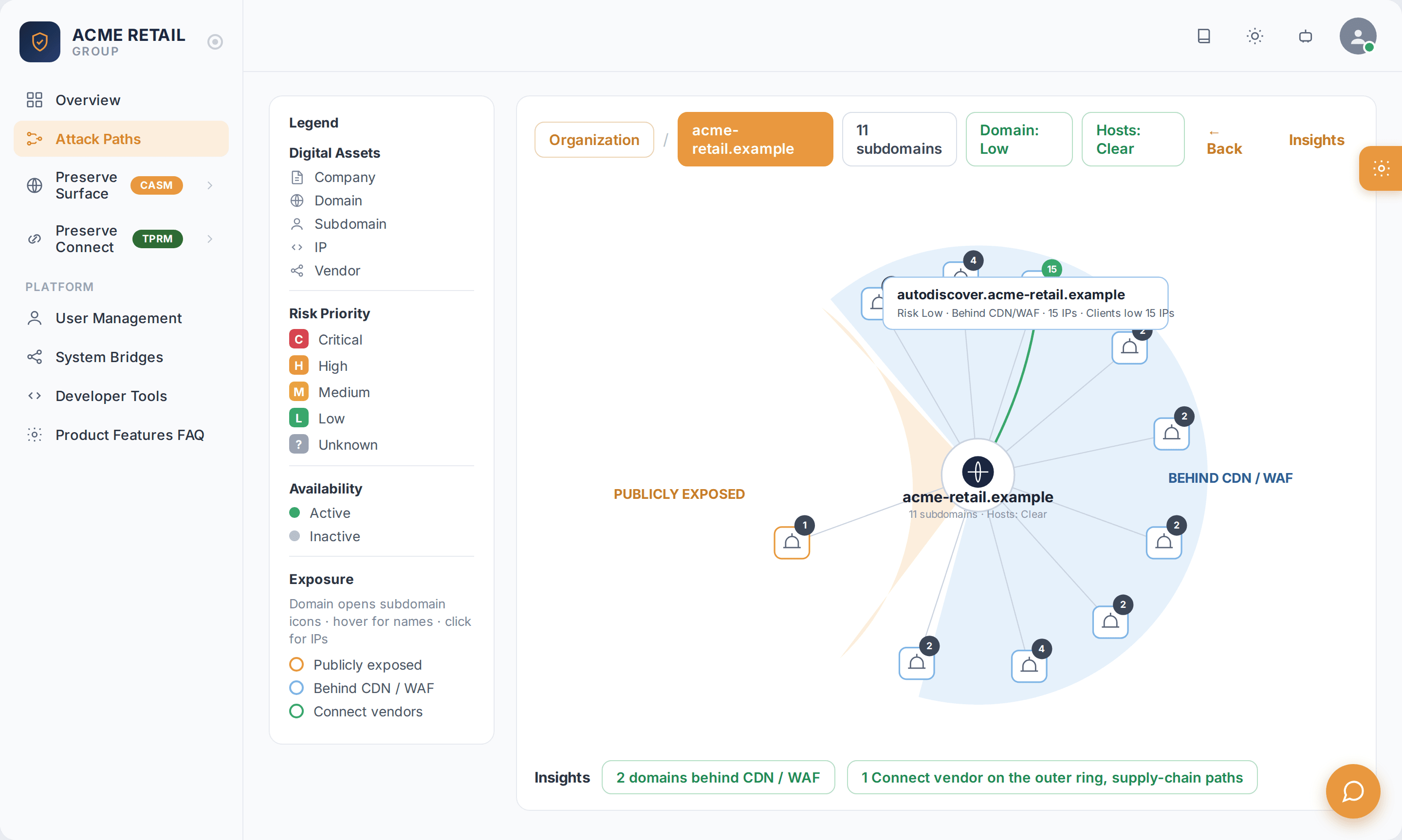
See the attack path before it becomes an outage or a breach.
Attack Paths maps your public footprint as attackers see it: domains, subdomains, hosts, and how exposure chains toward what matters.
Open a node for exploitation insights, then remediate the path that would take a service offline or open a route to customer data, not a generic asset checklist.
- Attack Paths
- Public vs CDN/WAF
- Vendor ring
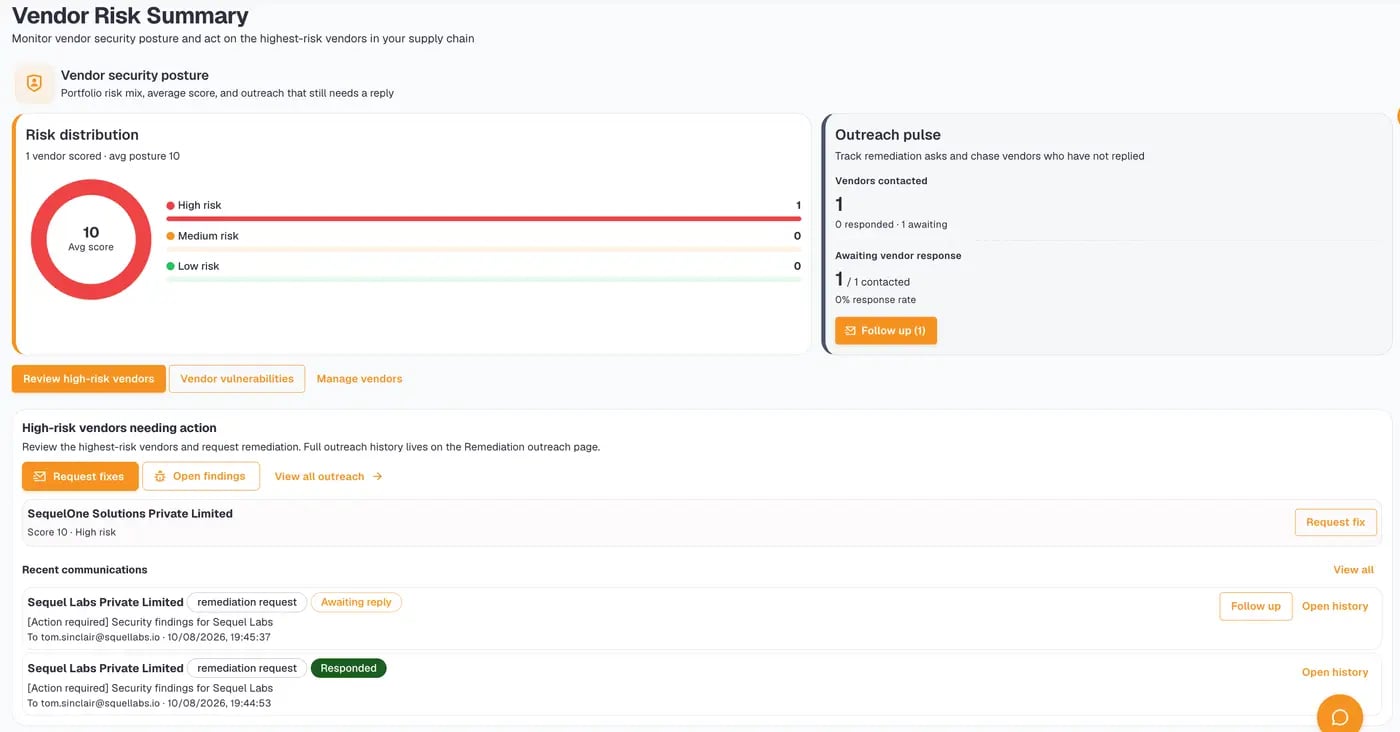
Stop customer data breaches that start on a vendor perimeter.
Connect continuously scores the internet-facing footprint of carriers, processors, and integration partners, then drives remediation outreach when risk spikes.
Share a vendor vulnerability report with evidence when diligence asks, so partner exposure is visible before it becomes your customer data incident.
- Vendor Risk Summary
- Remediation outreach
- Shareable vendor reports
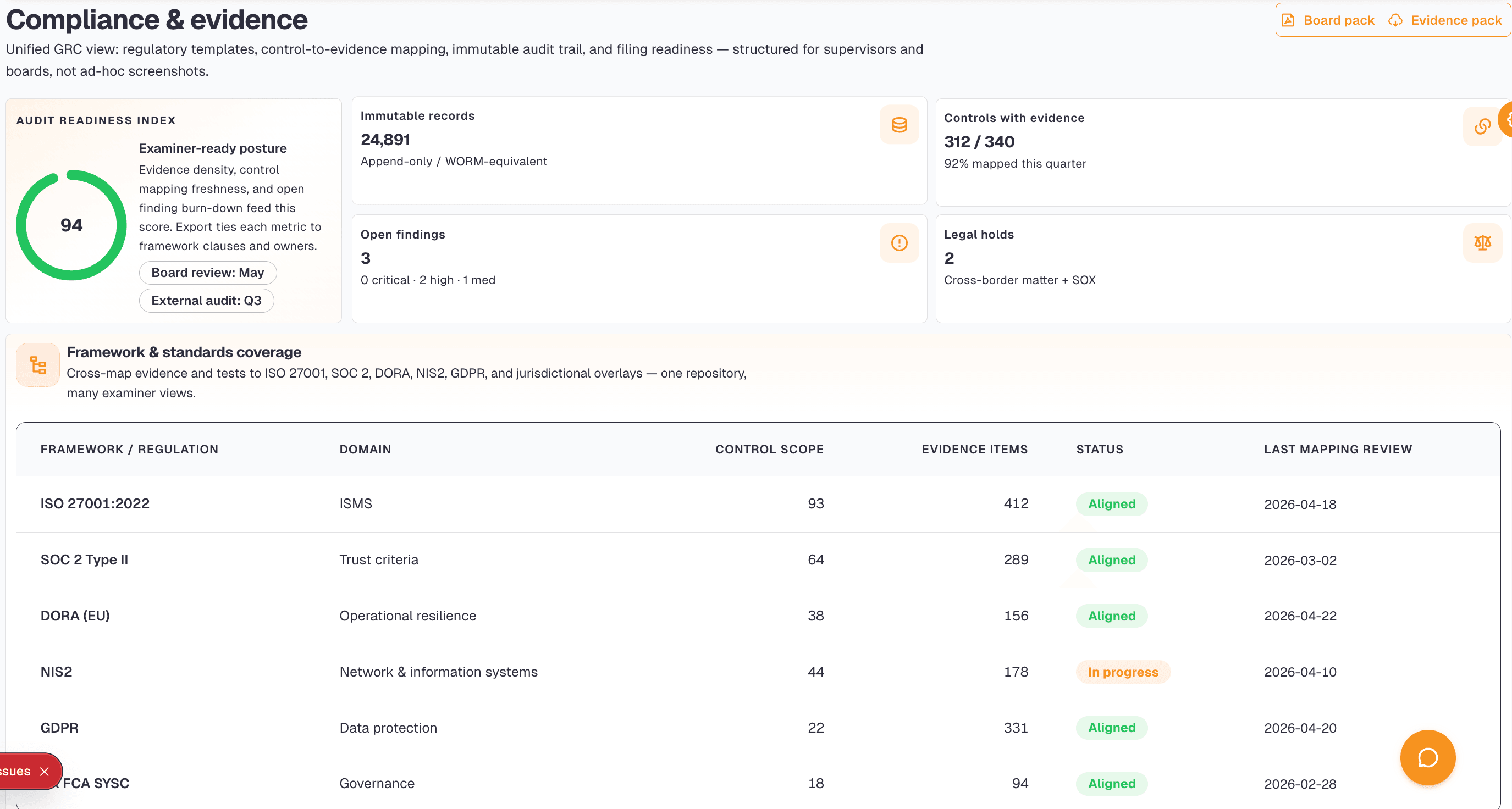
Hand buyers live proof, not a weekend evidence scramble.
Keep frameworks, controls, and evidence mapped in one place with an audit-ready view for SOC 2, ISO 27001, and customer diligence.
Publish a Trust Center and export board or evidence packs so RFPs start from current posture instead of reconstructing last year's packet.
- Trust Center
- Framework coverage
- Board & evidence packs
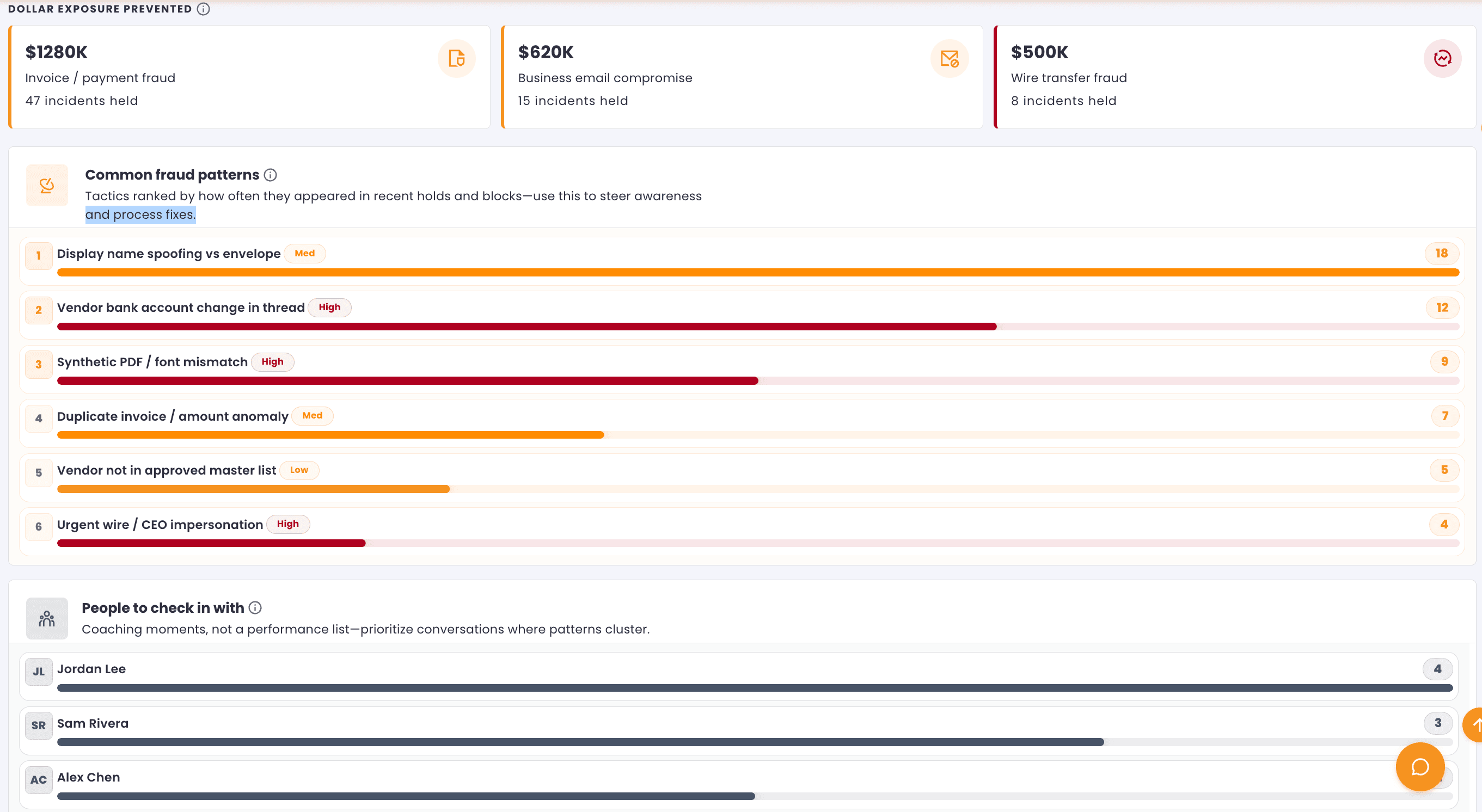
Hold the hijack before AP moves the money.
Defense overview ranks the tactics that hit payment teams: vendor bank-account changes in thread, look-alike domains targeting AP, display-name spoofing, and urgent wire impersonation.
Incidents are held with dollar exposure prevented visible, so the fraudulent bank change never becomes a settlement run.
- Bank-change detection
- Look-alike domain alerts
- Dollar exposure prevented
Also available:Preserve Edgefor perimeter interception.View all platform products →
How Preservers Intelligence stops the attack pathsthat hit platforms
Outage, customer data breach through vendors, and payment hijack. Follow each path and see where Surface, Connect, or Fraud intercepts before impact.
How exposed assets take your service offline
Attackers do not need to breach the main app to hurt the business. They find forgotten staging hosts, open admin portals, or misconfigured cloud endpoints and use them to disrupt availability customers feel immediately.
Reconnaissance
Attackers map your internet footprint: staging subdomains, forgotten APIs, open cloud consoles, and certificates that reveal what is live beyond the marketing site.
Weak entry found
A misconfigured or unmonitored asset becomes the foothold. It was never in the pen-test scope because it was not on the inventory your team trusted.
Disruption begins
They abuse the exposed service to exhaust capacity, lock out operators, or knock a critical portal offline. Support tickets and SLA clocks start first.
Customers feel the outage
Shipments stall, logins fail, or APIs time out. Revenue and reputation take the hit before internal tools even name the external asset that caused it.
Follow the steps above to see how this exposure path typically unfolds.
How Preservers Intelligence stops the attack pathsthat hit platforms
Outage, customer data breach through vendors, and payment hijack. Follow each path and see where Surface, Connect, or Fraud intercepts before impact.
How exposed assets take your service offline
Attackers do not need to breach the main app to hurt the business. They find forgotten staging hosts, open admin portals, or misconfigured cloud endpoints and use them to disrupt availability customers feel immediately.
Reconnaissance
Active riskAttackers map your internet footprint: staging subdomains, forgotten APIs, open cloud consoles, and certificates that reveal what is live beyond the marketing site.
Weak entry found
WaitingDisruption begins
WaitingCustomers feel the outage
WaitingFollow the steps above to see how this exposure path typically unfolds.
Teams we protectevery day.
Platform and payment-heavy organizations rely on Preservers to watch exposure paths before they reach funds, data, or a buyer review.




Four primary segments.One platform.
External attack surface visibility, vendor risk tracking, and fraud interception built for regulated financial firms and high-growth technology platforms.
Wealth Managers, IFAs & EAMs
Protect high-net-worth accounts, stop coached wire transfers, and meet FCA Consumer Duty requirements.
Explore this industryTrust & Corporate Services (TCSP)
Defend corporate records, multi-jurisdiction entity administration, and confidential trust assets.
Explore this industrySaaS & B2B Software
Find exposed APIs, staging leaks, and third-party partner vulnerabilities before customer security reviews.
Explore this industryLogistics & Supply Chain Tech
Monitor carrier portals, 3PL integrations, and operational pipelines against freight payment diversion.
Explore this industryFrom signup to
full protection.
No IT project required. Preservers fits into your existing workflow without the long procurement cycles and heavy lift of traditional enterprise security.
No infrastructure changes
No DNS reconfiguration, no endpoint agents, no VPN tunnels, and no on-premise hardware. We connect to your existing cloud workflows without touching your core stack.
No procurement theater
Start without a six-month IT review board. Connect once, see external risk fast, and expand coverage as the business needs it.
Works with the team you have
Security, engineering, and ops get continuous external monitoring and clear next steps, without standing up a separate security department to start.
First report in 24 hours
Connect once. Your first threat intelligence report arrives within 24 hours, followed by continuous monitoring and autonomous protection from day one.
Next step
From signup to protection in under 20 minutes.
Get a free posture review, or talk to an expert.